
Removal, pruning, stumps and land clearing on the Sunshine Coast.
Tree removal
Dead, diseased, damaged or overgrown trees, from small residential jobs to large removals beside houses and in built-up commercial areas.
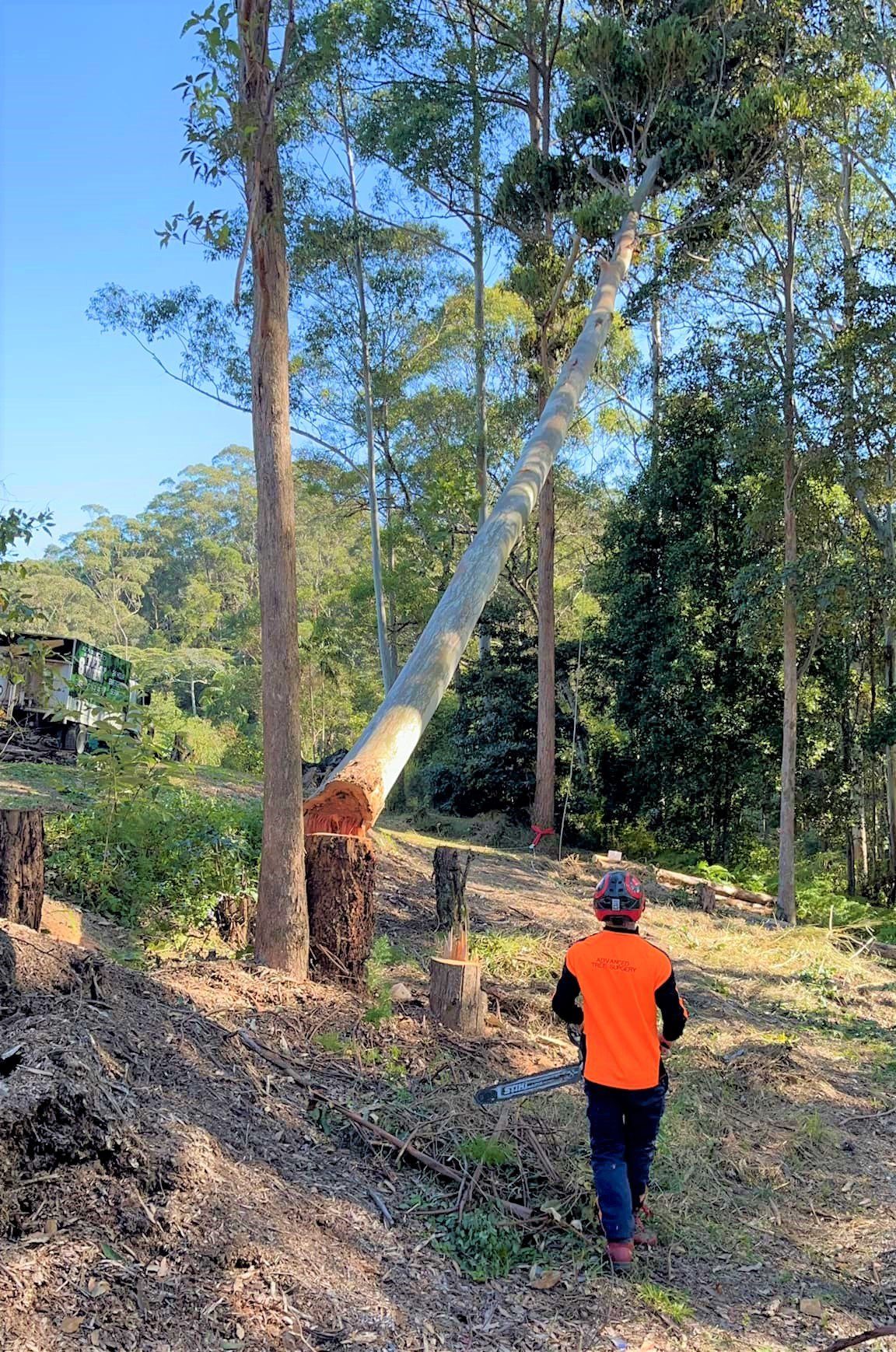
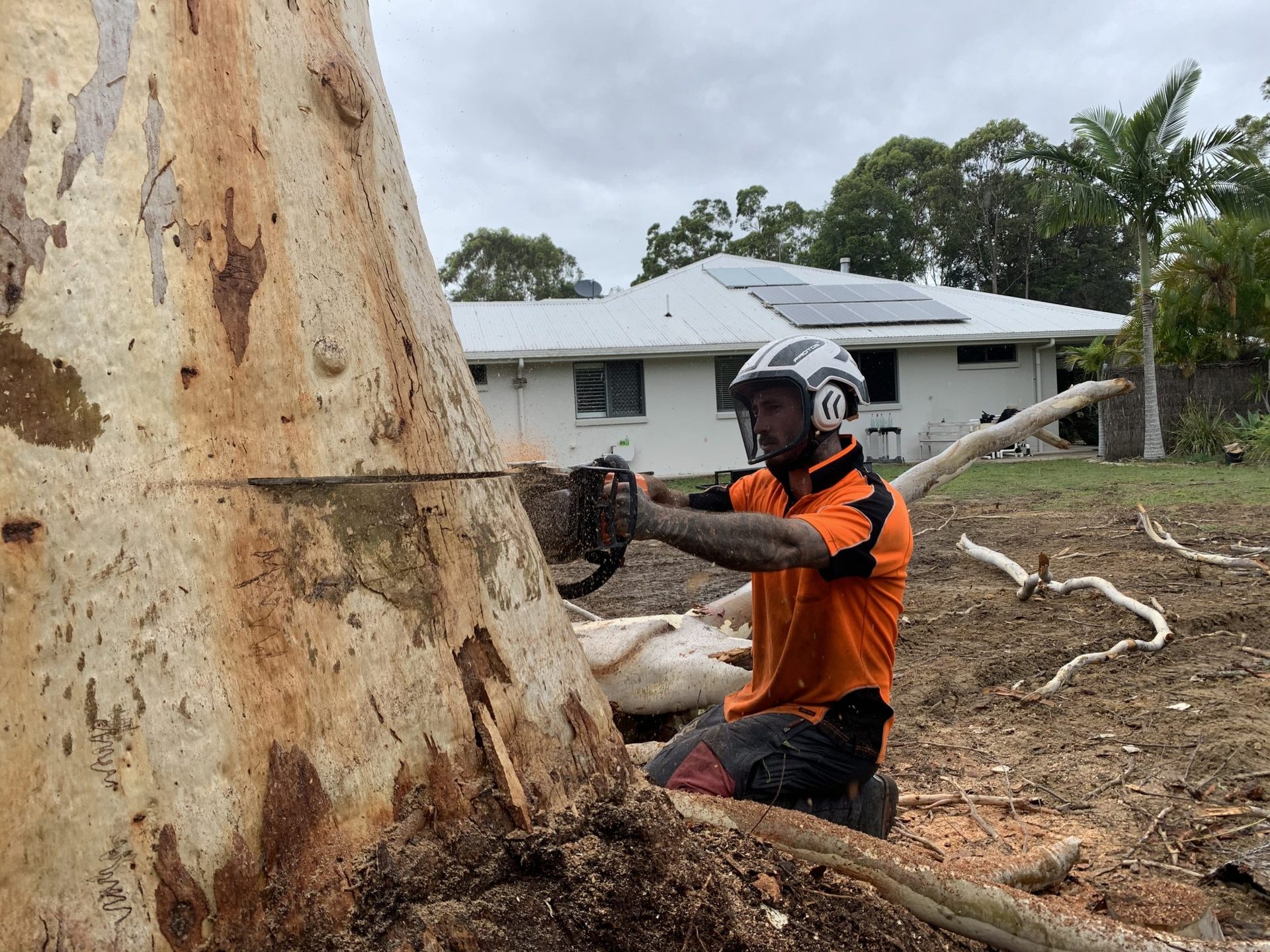
Felling. Recommended only when the area around the tree gives it enough clearance; a safe felling cut brings large trees down without damaging surrounding structures. Smaller trees take a few hours, bigger species up to a full day.
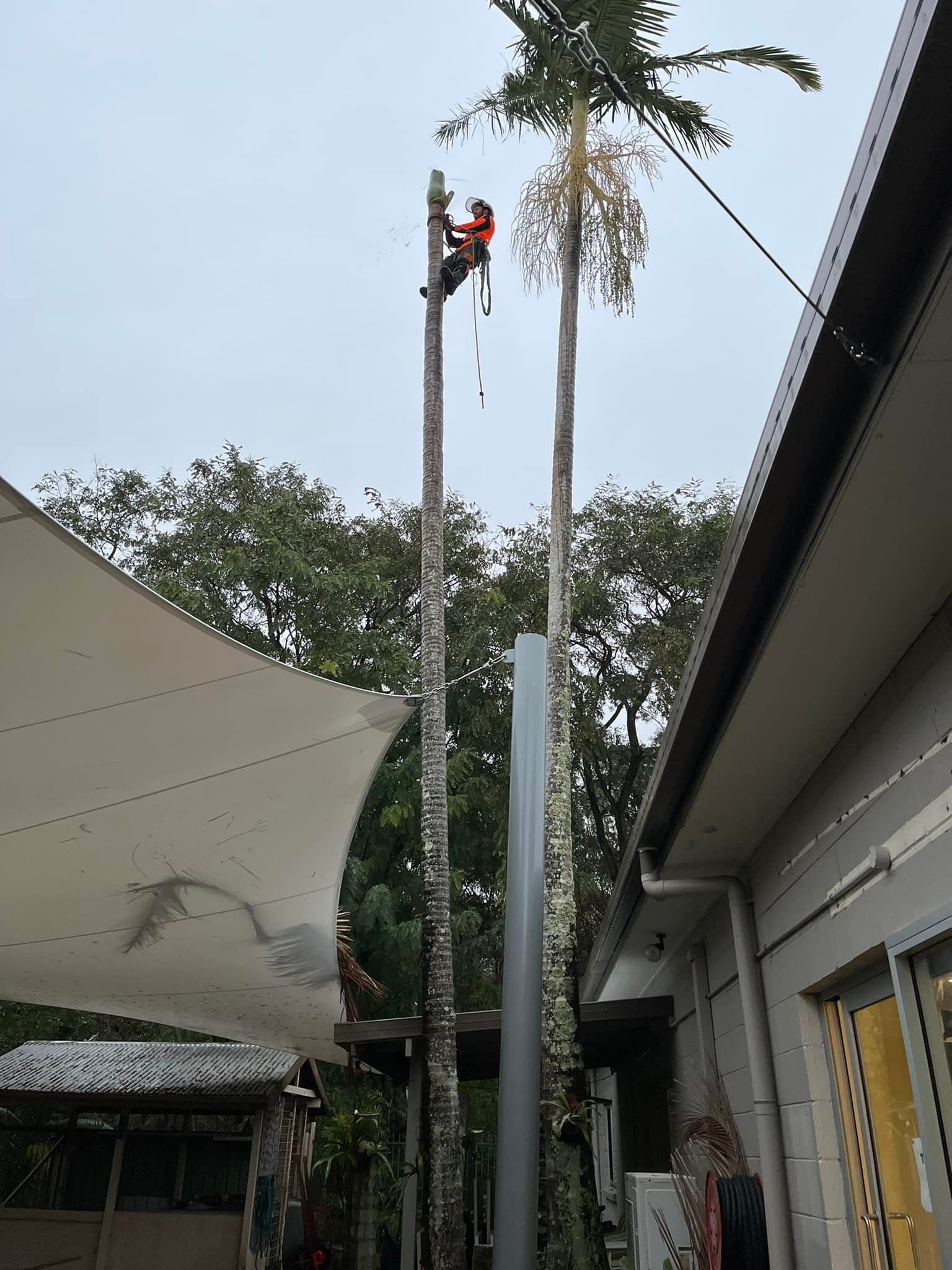
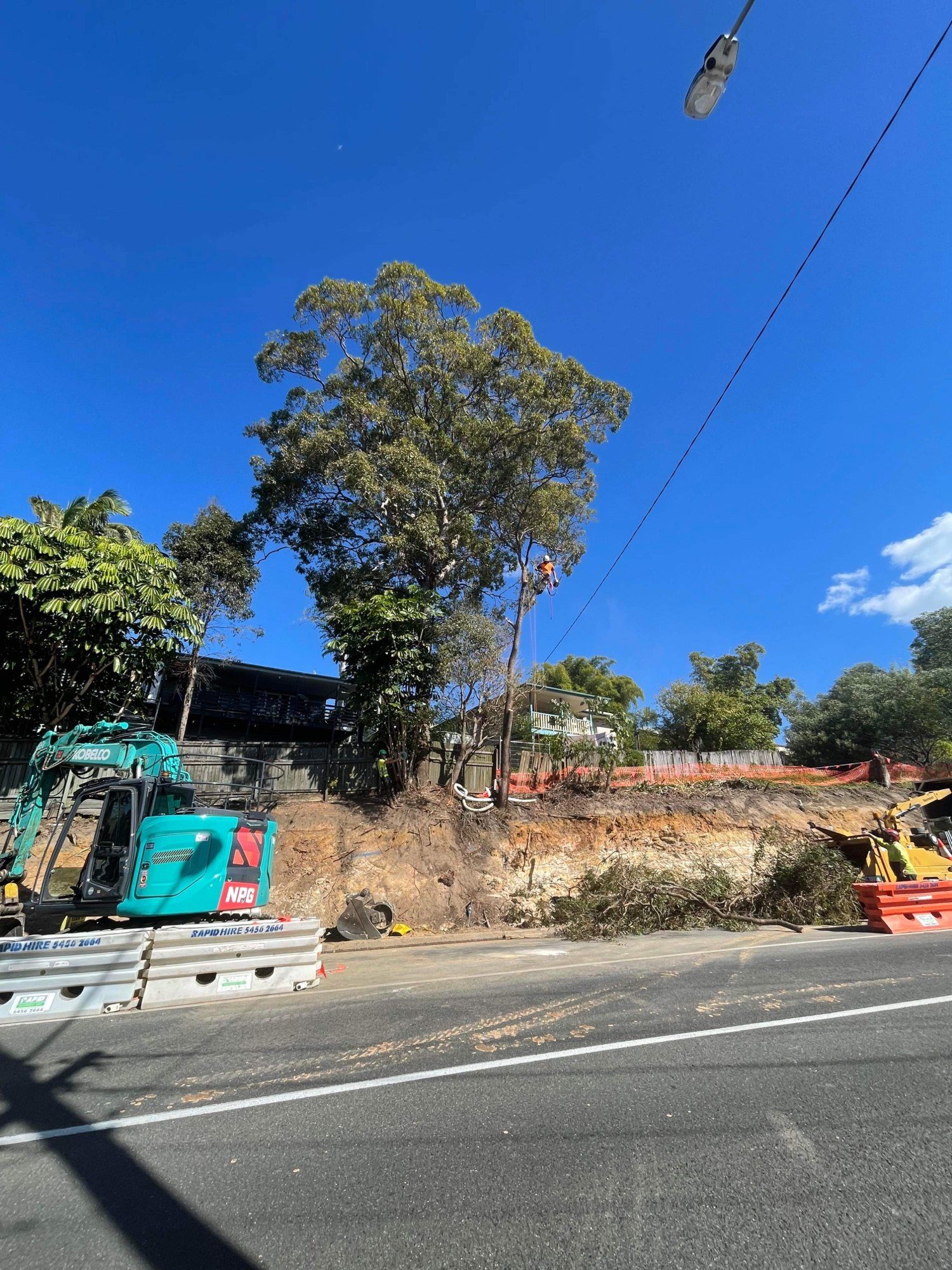
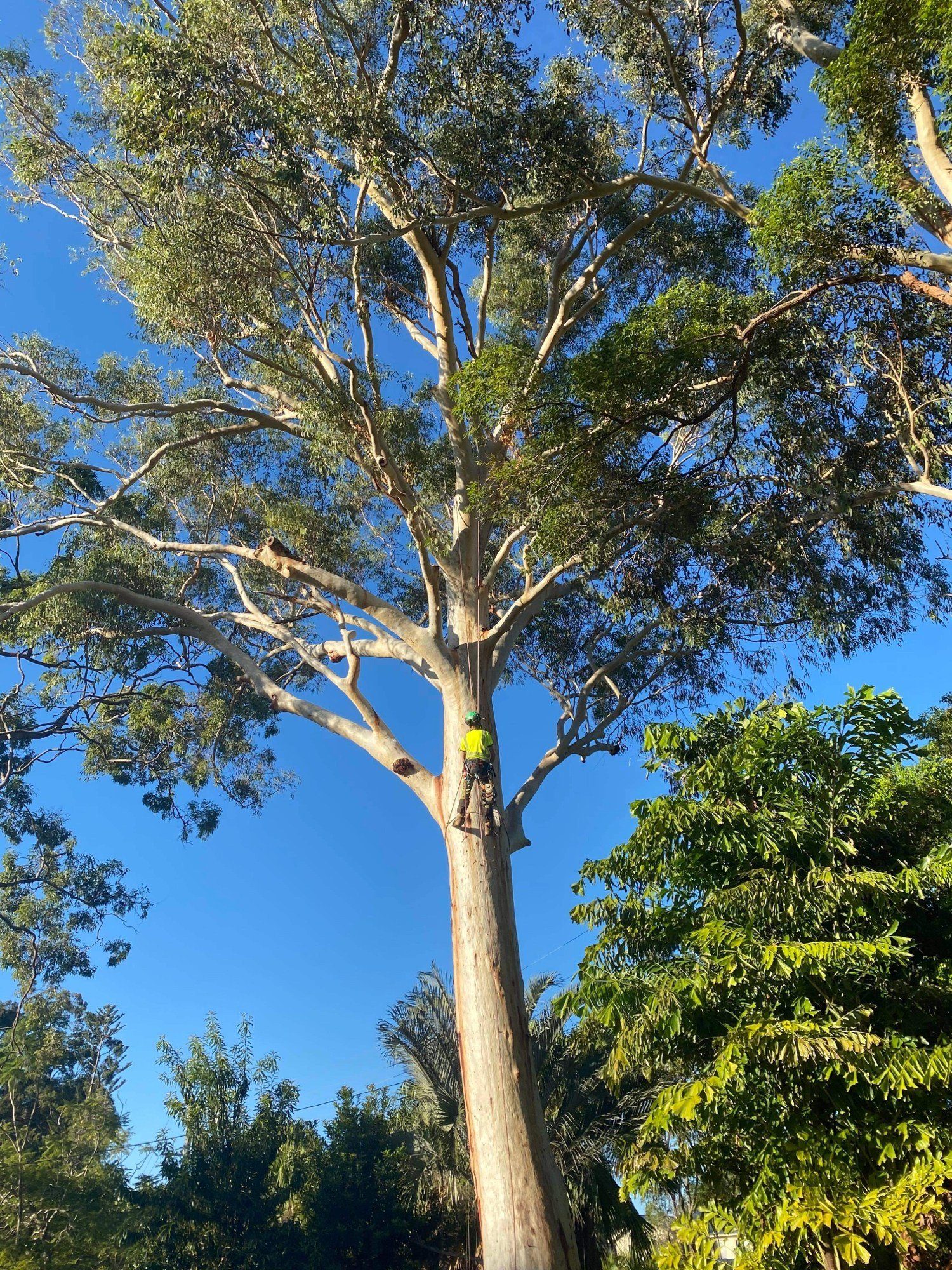
Confined removal. For trees close to other structures, an arborist climbs, cuts the large branches and lowers them to the ground crew, who feed them into the chipper.
Crane-assisted. Dead or diseased trees are cut down with a crane assisting.
Hazardous trees. Soil quality, trunk and root condition and the surroundings are checked to judge the risk a tree poses to your home or business.
Emergency and fallen trees. A 24-hour service for fallen trees, debris, and storm-damaged trees or branches at risk of falling.
Shrub removal. Overgrown or intrusive shrubs removed so they do not regrow.
Pruning, trimming and palms
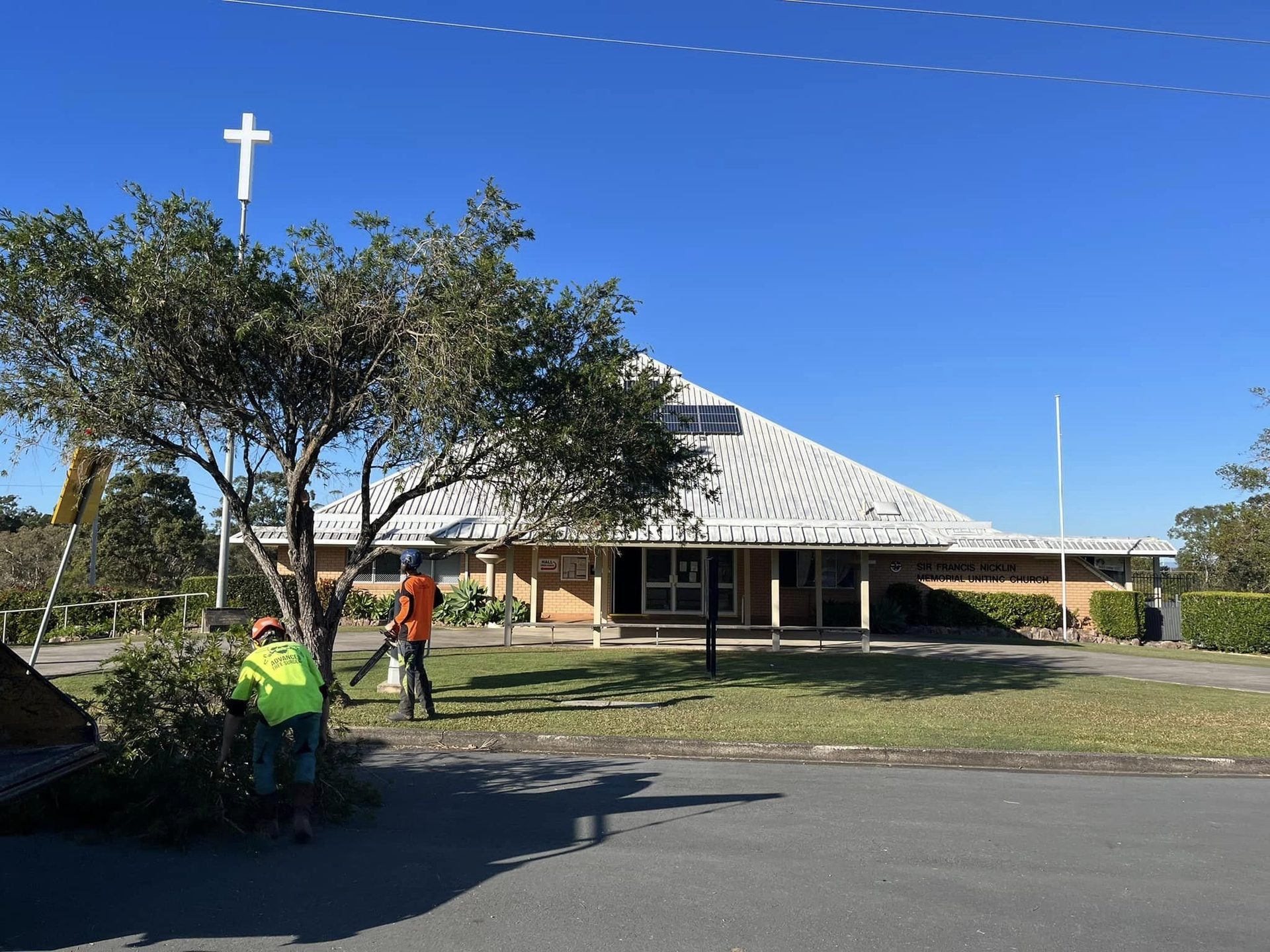
Trimming to Australian standards for large trees and palm trees: dead and crowded branches out, more air and light in.
- Deadwooding
- Dead and dying branches removed, for the tree’s health and looks.
- Crown thinning
- Better air movement and light through the canopy.
- Crown lifting
- Low branches removed to clear space for people, structures and vehicles.
- Crown reduction
- Specific branches removed to cut a tree’s size and weight.
- Palms
- Palm pruning, palm cleaning and palm removal.
- Lopping
- Hazardous branches taken off safely; over power lines, call for emergency lopping.
- Pollarding
- Shrub trimming and pollarding, finished with mulch.
Stumps: ground, dug out, or treated
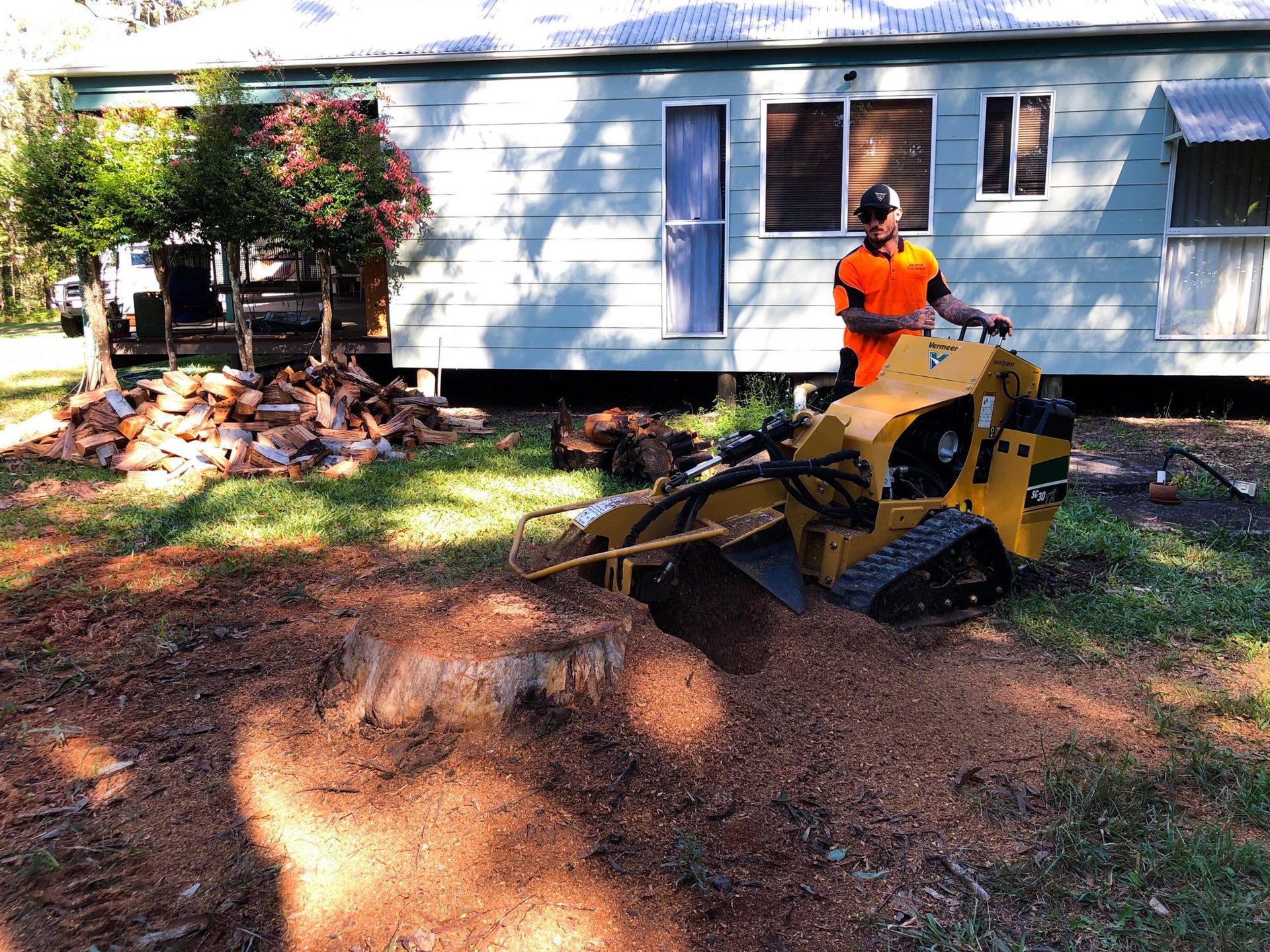
Leaving a stump is not advised: it can rot, affect nearby trees, attract termites and leave a trip hazard. Grinding is usually recommended.
| Method | When it is used | What to know |
|---|---|---|
| Grinding | Most stumps. Faster and cost-effective. | Stump and top roots ground 4 to 6 inches below grade; holes filled with soil and organic material. The chips make good mulch. |
| Manual removal | When roots have damaged a foundation or plumbing. | Removed by hand so nearby utilities are not damaged. |
| Chemical | Breaking down the stump and roots in place. | Can leave a dead zone around the stump unless the affected soil is removed. |
Block and land clearing
For new construction on undeveloped land, residential or commercial, done quickly so the build stays on schedule.
Brush removal. Small trees, shrubs, plants and weeds that would get in the way are removed with machinery, avoiding damage to the trees and ground around them.
Forestry mulching. The cleared vegetation goes through a wood chipper; the chips improve the soil and reduce erosion.
Levelling and excavation. The area is levelled after clearing, ready for the next stage.
Storm damage and insurance work is handled the same way.
Tree care and risk assessment
Arborist consulting. Recommendations and a plan for the trees on your property, from arborists trained in tree biology, health and risk.
Risk assessment. Structure and health evaluated to find hazards, including storm risk, before they become emergencies.
Planting. Native species recommended, with climate, soil and sun considered and deep watering to establish roots.
Fertilising. Nitrogen, phosphorus and potassium for root growth and resistance to pests, disease and stress.
Pests and diseases. Root rot, leaf spot, powdery mildew, borers and aphids are among the problems seen on Sunshine Coast trees.
Quotes. Free, with a working proposal and no down payment until the work is done. Call 0497 049 970